






The right wedding ring width is the one you enjoy wearing, both on its own and beside any other rings. A photograph can help you choose a style, but trying a few widths on your hand tells you much more about comfort and proportion.
Width is measured across the band, along your finger. It is different from your ring size, which describes the fit around your finger, and from the band’s depth or thickness. Getting those three details clear makes it easier to compare rings and ask useful questions at an appointment.
What do different wedding ring widths look like?
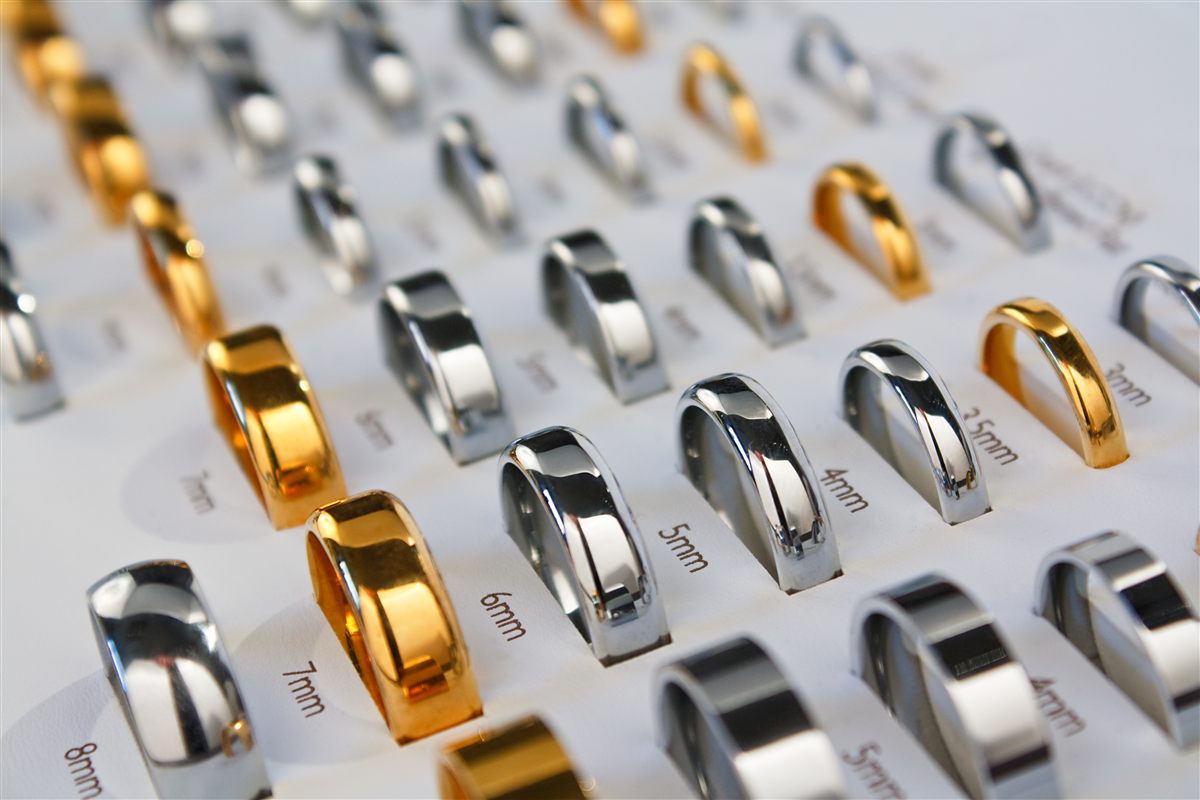
Start by comparing a few deliberately different samples rather than trying every option. A 2mm, 4mm and 6mm band can give you a useful visual reference; these are comparison points, not recommendations for particular hands or genders.
- A narrow band creates a finer line and may suit someone who wants a discreet ring or space for a stack.
- A medium-width band can give a more noticeable outline while leaving room beside another ring.
- A wide band makes the ring a stronger feature on the hand. Check how it feels when your fingers move together.
Descriptions such as narrow and wide are relative. Ask for the actual millimetre measurement, especially when comparing photographs taken at different angles.
Does a wider wedding ring feel tighter?
It can. Wedding Rings Direct’s guide to widths and profiles explains that wider bands can feel tighter than narrower ones, and that the shape of the band affects how it feels. This is why a size measured with one style should not automatically be treated as the final answer for a very different ring.
Ask the jeweller to check your fit with a sample close to the width and profile you intend to buy. Do not simply add half a size because you have chosen a wider design: the appropriate fit needs checking on your hand.
Try the whole ring combination
If you will wear your wedding band beside an engagement ring, take the engagement ring to the appointment. Look at the combined space they occupy, how they sit at the base of the finger and whether either ring turns or presses against the other.
You do not have to match the two widths. A fine wedding band can sit beside a more substantial engagement ring, or a wider band can become the main visual feature. The useful question is whether you like the combination in everyday use.
Ask the jeweller to inspect the contact between settings, especially where stones or projecting details meet another band. A photograph alone cannot establish whether two particular rings will wear comfortably together.
Separate width from shape and finish
Two bands with the same width can look surprisingly different. A flat exterior, a curved surface and a textured finish change the impression of the ring. Compare similar designs first so you can tell whether it is the width or another detail you prefer.
Our guides to different wedding ring styles and choosing a wedding ring finish can help you narrow the other choices before shopping.
A useful appointment checklist
- Try at least two noticeably different widths before settling on one.
- Look at your hand from a normal distance as well as close up.
- Gently bend your fingers and check the feel against neighbouring fingers.
- Try any rings you plan to wear together as a complete set.
- Write down the width, size, profile, metal and finish of your favourite.
- Ask about alterations, returns and personalised-order conditions before committing.
If your partner prefers a different width, there is no need to compromise on comfort to create an identical pair. You can choose a shared metal or finish while keeping each ring’s proportions individual.
How does width affect the budget?
Ask for quotes with the full specification written down. Width alone does not tell you the price: metal, depth, construction, stones and workmanship also matter. A useful comparison keeps as many of those details consistent as possible.
If a preferred design costs more than expected, ask the jeweller to show alternatives within your budget rather than assuming the thinnest available band is the best saving. See our guide to choosing a wedding ring for the wider decision.
Common questions
Is 4mm too wide for a wedding ring?
There is no universal cut-off. Try it on your own hand, beside any other rings, and compare it with narrower and wider samples.
Should both partners choose the same width?
Only if both want to. Matching rings can share a detail without having identical measurements.
Can I choose the width from an online photograph?
A photograph is a starting point. Check the stated measurements and ask about samples or an in-person fitting before ordering, particularly for a personalised ring.