






Wedding ring terminology can make comparing bands easier, from gold purity and stone settings to profiles and finishes. This glossary explains the terms you are likely to meet at a jeweller. A wedding ring is a personal choice rather than a requirement for every couple.
So are you looking for wedding ring terminology? We’ve gathered the common and uncommon terms that you may run into when searching for a wedding ring. You may even want to print out this page as a cheat sheet to take with you to the jeweller!
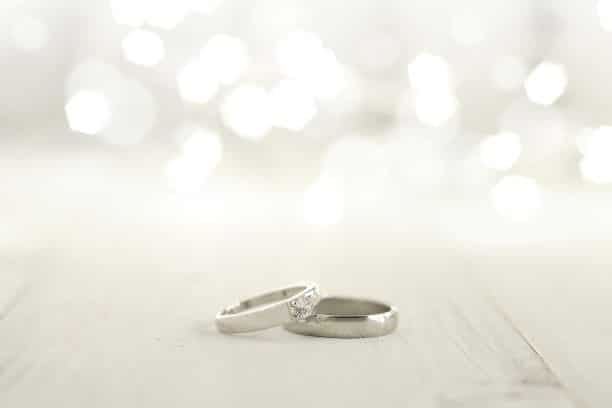
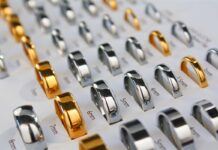
Band – A band is a plain ring that fully encircles the finger. You may also hear this term used to describe the metal portion of a ring with a stone set in the centre, although that is more commonly known as a shank.
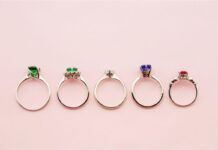
Mounting – Also known as the setting, this term refers to the portion of the ring that stones are set into. There are also a large range of different setting types with their own specialist terminology.
Ring Engraving – This can refer to a decorative pattern or words which are etched into your wedding band. This can be done in a variety of ways including by hand or by laser.
Ring Width – The amount of space along the finger the ring covers.
Ring Profile – The shape of the ring.
Ring Size – The fit around your finger. UK letter sizes and other international systems use different labels, so check the retailer’s conversion chart. Width and internal profile affect the feel: try a sizer with a similar width and ask how the jeweller measures its rings.
Ring Finish – The external metal look and feel of the ring.
Shank – The part of the ring that surrounds the finger, usually describing an engagement or cocktail ring with a larger stone setting.

Wedding Ring Styles
While a plain band may seem like a simple purchase, there are actually many types of wedding ring styles available. You need to know what they are, the correct wedding ring terminology to describe them, and how to choose the best one for you and your partner. Our terms below will help you pick the best ring for your special day that you will want to treasure for the rest of your life.
Celtic – A ring containing a Celtic knot design that symbolises endless love as the knot is never-ending without a beginning or end.
Contemporary – A modern and stylish design for individuals who are looking for an elegant but unique wedding ring.
Decorative – A style that uses decorative touches such as millgrain edges, grooves and bevelled edges.
Plain – A simplistic and smooth ring design with no diamonds or embellishments.
Diamond-set – Diamond set wedding rings are usually variations of plain or shaped bands with added stones.
Eternity – A band with a repeating line of diamonds or other gemstones. A full eternity ring has stones around the whole band; a half eternity ring has stones across roughly half. Full eternity designs can be difficult or impossible to resize, so confirm the options before ordering.
Sandcast – Hand-made rings that are created using a metal casting method that uses sand as the mould material.
Shaped – A contoured band designed to sit alongside another ring. An off-the-shelf shape will not fit every engagement ring; try them together or ask about a bespoke fit.
Two-metal – A ring combining two metals or metal colours. Manufacturers use different joining methods, so ask about construction and future resizing.
Wooden or wood-inlay – A ring made from wood, or a metal ring incorporating a wood insert. Ask about water exposure, maintenance and repair options.

Wedding Ring Metals
When searching for the perfect wedding band, it is often difficult to determine what metal is best. Each metal has a certain quality and aesthetic to it which can help make or break the overall appearance of the ring. These materials also wear very differently and have a range of different physical properties. It is up to you to determine which properties are the most important to you when selecting a wedding ring. Here is a rundown of the most popular materials used and their key properties.
Carat (ct or k) describes gold purity; a gemstone’s carat weight is a different measurement. Birmingham Assay Office’s guide explains the UK fineness marks:
- 9ct gold (375): 37.5% gold.
- 14ct gold (585): 58.5% gold.
- 18ct gold (750): 75% gold.
- 22ct gold (916): approximately 91.6% gold.
- 24ct or fine gold: very high-purity gold; a 999 mark means 99.9% gold.
Colour, hardness and wear depend on the alloy and manufacturing process as well as the gold content. A higher carat number alone does not tell you how a finished ring will withstand daily use.
Alloy – A metallic material combining a metal with one or more other elements, used to adjust properties such as colour and hardness.
Gold plated – A layer of gold or gold alloy over a different underlying material. It is not solid gold throughout, and the coating can wear. Ask about the base metal, coating thickness and replating.
Palladium – A naturally white precious metal in the platinum group. Compare the actual alloy and finished ring rather than assuming a fixed hardness or price relationship with platinum.
Platinum – A dense, naturally white precious metal. It can develop surface marks and a patina with wear; durable does not mean scratch-proof.
Rose gold – Gold alloyed with copper and other metals to give a pink or reddish colour.
Sterling silver – An alloy containing 92.5% silver, marked 925. It can scratch and tarnish, so ask about care and everyday wear.
Tungsten carbide – A very hard material used for bands. It resists scratching but can crack under impact and normally cannot be resized. It is not indestructible.
Titanium – A lightweight, corrosion-resistant metal. Resizing can be limited, depending on the construction and jeweller. Follow workplace and activity safety rules about removing jewellery.
White gold – A gold alloy with a pale colour, often finished with rhodium plating. The coating may need renewing; ask about the alloy and maintenance costs.
Yellow gold – A yellow-coloured gold alloy, available in different purities.
Zirconium – A grey metal also sold with a black oxidised surface. Confirm the material, coating, care and resizing options for the particular ring.
GIA’s ring-material guide discusses the trade-offs between metals. If you have a known metal sensitivity, ask for the full alloy composition rather than relying on a general “hypoallergenic” label.

Wedding Ring Engraving
A wedding is one of those milestones in your life that you want to make sure will never be forgotten. One way to ensure people don’t forget a special occasion is by engraving their names or other words on their rings.
Engraved wedding rings can help you share special moments from your life with each other. A wedding ring that is engraved makes it personal to the people involved; it shows a piece of who you are, and what makes your relationship unique.
Hand engraving – A traditional method of engraving which uses precision tools to apply patterns or lettering painstakingly by hand. The result depends on the engraver’s skill and the available space.
Machine engraving – A method of engraving which uses a machine equipped with a diamond tipped cutter. Ask which surfaces the jeweller can engrave.
Laser engraving – A state of the art method of engraving which utilises a precision laser to apply lettering, patterns or images to the surface of a ring. This is a highly technical process which has fantastic results. Available fonts, detail and placement depend on the material, ring dimensions and equipment.

Wedding Ring Profile
Choosing the right wedding ring shape can be a bit overwhelming. There are so many different options and each one has its advantages and disadvantages. It’s important to choose the wedding ring that best fits you and your partners’ personal style. Try on different profiles before committing, as what you end up preferring may surprise you! That way, you will be happy with your choice for a long time to come.
Classic Court – The most traditional shape for wedding rings. The court profile is oval-shaped in cross-section. It is curved on the inside, outside and side of the ring, creating a comfortable fit.
Classic D Shape – D-Shaped rings are flat on the inside and curved on the outside of the ring. The outside curves are rounded for a softer and classic finish.
Classic Flat – Popular with women and men, the ring is flat on all sides resulting in a modern and clean-looking ring.
Double Comfort – A double comfort ring is in essence a flat profile with the outer corners softened. This creates a modern sleek look but feels more comfortable on the hand.
Flat Court – A cross between a flat and a court, the flat-court profile has a flat outer face with a curved interior. This gives the sleek look of a flat with the comfort of a court.
Halo – Usually a design with smaller stones surrounding a central stone, as explained in GIA’s guide to settings. Some sellers use the word differently for a plain band profile; check the cross-section drawing rather than assuming it has one universal meaning.
Knife Edge – Knife edge bands are traditionally very thin in appearance. The style features two slightly slanted sides that meet at a point at the top of the ring.
Modern Court – A contemporary looking design that is flat-sided. A practical shape that can be used for decorative or stone set rings.

Wedding Ring Finishes
The next piece of essential wedding ring terminology to familiarise yourself with is the wedding ring finishes. What are the different types of wedding ring finishes? When it comes to the final look of your wedding band, there are a variety of options available to suit every style.
If you’re thinking about getting the right ring finish for you then here are some terms that you should know about.
Coarse Matt finish – A more textured finish with decorative features.
Filigree finish – A vintage design where small precious metal threads are created to form a lacy and artistic design.
Fine Matt finish – A non-reflective finish with minimal surface texture.
Hammered finish – A dented surface finish created by a tiny hammering technique.
Hand Engraving finish – A jeweller hand carves the precious metal with unique designs.
Millgrain finish – Antique and vintage styled finish where a delicate beaded design is formed along the edge of the piece.
Mirror finish (polished) – A mirror-like surface on the ring due to the highly reflective polished finished. One of the most popular ring finishes.
Sandblasted finish – A high-pressure sandblasted finish resulting in a textured effect.
Satin finish – Less shiny appearance compared to the polished finish. The finish does not show slight scratches so easily.
Stardust finish – A part-polished and part-sandblasted finish that gives off a sparkling effect.
Super Scratch finish – A natural worn-in, scratch design finish that is created by hand.
Profile and finish names vary between makers. Ask to see a sample or cross-section, and confirm whether the finish can be renewed after wear.
Before ordering, confirm the metal and purity, ring width and depth, size, finish, delivery date and resizing policy. For help comparing materials, read our guide to wedding ring metals.
Further Reading