








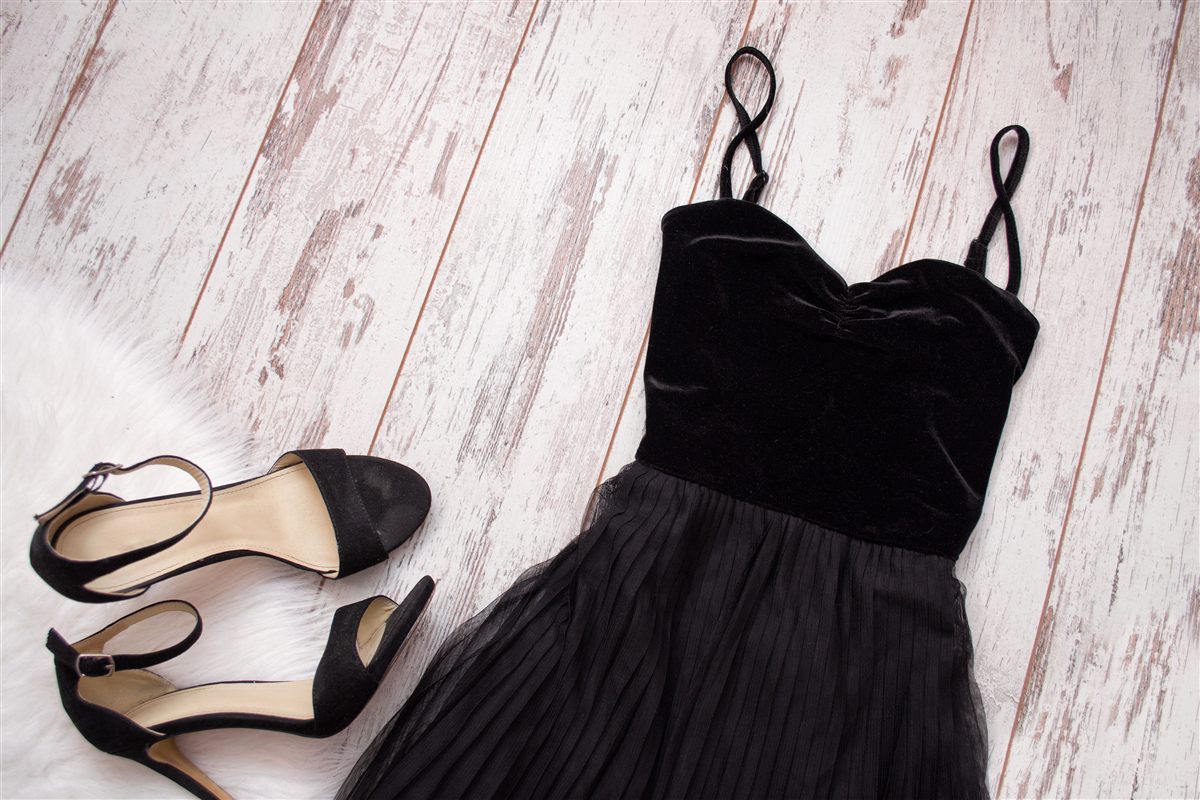
Yes, black can be an appropriate colour for a wedding guest outfit. It is not automatically disrespectful or too sombre. What matters is whether the outfit suits the invitation, the ceremony and the couple’s wishes.
A black suit at a formal evening wedding and a casual black T-shirt at the same event are different choices. Colour is only one part of the decision. Start with the requested level of formality, then consider fabric, fit, accessories and the practical demands of the day.
Read the dress code before applying a colour rule
Look at the invitation and any wedding website information. If the couple asks for bright colours, a specific palette or no black, follow that request if you can. If no preference is given, there is no reason to assume black is prohibited.
Emily Post’s guest-attire guidance puts the invitation, time, ceremony and local custom at the centre of the decision. Fashion editors also recognise black as an option: Who What Wear’s UK guide discusses how it can work for wedding guests. Neither replaces a clear request from your hosts.
Black tie does not mean every outfit must be black
Black tie describes a formal dress code, not a colour palette for all guests. An elegant black evening outfit may fit that setting, but a black casual outfit does not become formal simply because of its colour.
If the invitation uses a dress code you do not understand, check the couple’s explanation or ask a brief practical question. That is more useful than buying something based on the words “black tie” alone.
How to make black work for a daytime wedding
Think about how the outfit feels as a whole. A black dress with an interesting neckline, a tailored jumpsuit or a smart trouser suit can all be starting points. Choose something you can sit, walk and celebrate in comfortably.
Accessories can change the mood without requiring a new wardrobe. You might add a coloured bag, a patterned scarf or jewellery you already own. These are styling options, not requirements: you do not have to add a bright item to earn permission to wear black.
For an outdoor celebration, consider the forecast, the amount of walking and whether you will be on grass or gravel. A suitable layer and practical shoes will make more difference to your enjoyment than following a rigid rule about colour.
For an evening reception
Use the invitation to judge how dressed-up to be. A black outfit you wear to work might need different shoes or accessories for an evening celebration, while a very formal gown might be out of place at a relaxed pub reception.
Consider what you will wear for the whole event, including travel and any time outdoors. If you are attending only the evening reception, check whether the dress code differs from the ceremony rather than assuming it is more formal.
Respect ceremony and family preferences
Some couples or families may associate certain colours with mourning, celebration or a particular role. Do not assume everyone from a nationality or religion follows the same custom. If the invitation is unclear and you have a specific concern, ask the couple or a nominated contact.
There may also be requirements about head coverings, shoulders or footwear at the ceremony venue. These apply to the outfit’s suitability independently of whether it is black. Bring any necessary layer or covering so you are not trying to solve the problem at the door.
What about the mother of the bride or a bridesmaid?
If you have a role in the wedding party, coordinate with the couple before choosing the outfit. They may have a planned palette or want to discuss how the group will look together. That does not mean black is inherently unsuitable; it means your clothing is part of an agreed plan.
Ask about comfort and cost as well as appearance. A request to match a particular shade or style should be made early enough for everyone to find something that works.
Can a black-and-white outfit work?
A dark outfit with a small white detail is different from an overwhelmingly white or ivory dress. Consider the overall effect and whether it looks bridal, rather than treating any white button or pattern as forbidden. If the design is mostly pale and you are uncertain, choose an alternative or ask.
For broader advice on being a considerate guest, see how to avoid upstaging the bride. The point is to respect the occasion, not to police someone’s body or require an expensive new outfit.
A quick check before you leave
Confirm that the outfit fits the dress code, any ceremony requirements and any colour request. Try it on with the shoes and layer you will actually use. If all of that works, wearing black need not be a problem.