



Mismatched bridesmaid dresses work best when everyone knows which details are shared and which are their own choice. That might mean one colour in different shapes, several related colours, or a mixture of dresses and separates with a similar level of formality.
You do not need identical outfits to make a bridal party feel connected. A clear brief and a realistic budget are more useful than asking friends to guess what ‘something soft and romantic’ means.
Decide what you want to match
Choose one or two connecting details, then leave the others flexible. If every feature is prescribed, the shopping task becomes much harder and the benefit of choosing different styles disappears.
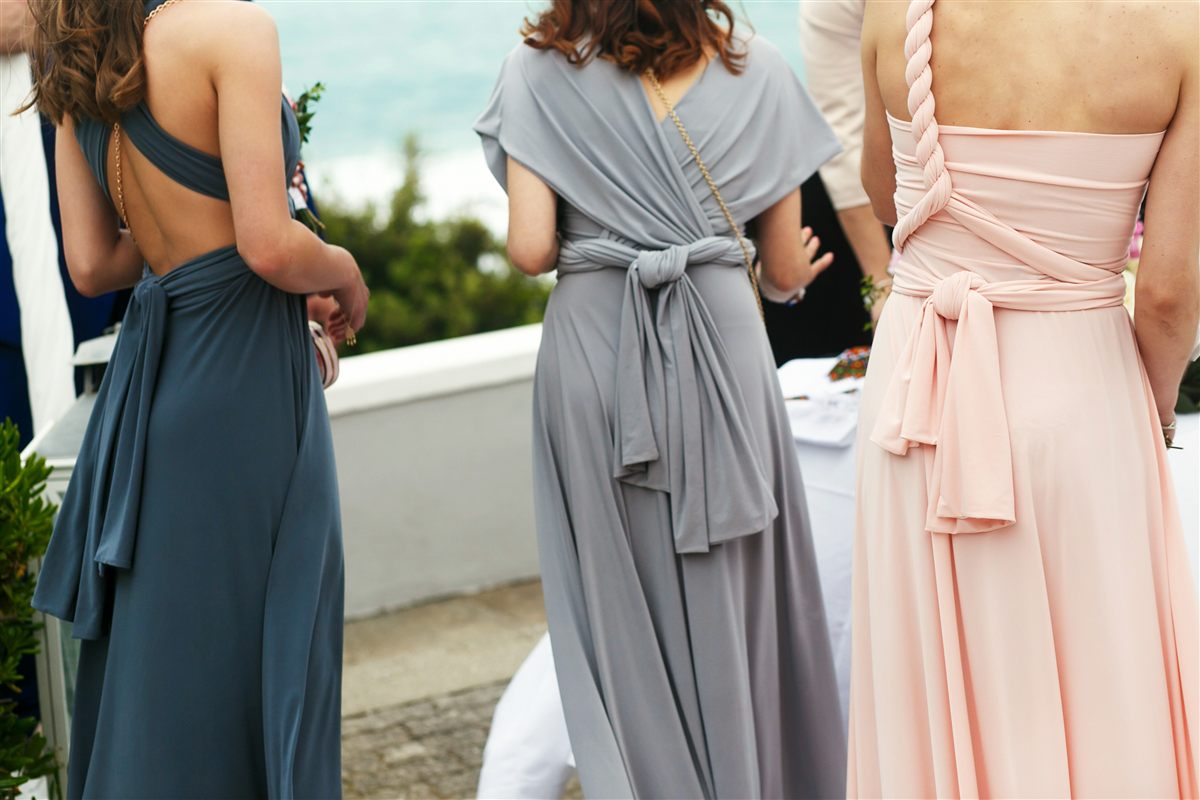
- One colour, different shapes: each person chooses a neckline, sleeve and fit they enjoy wearing.
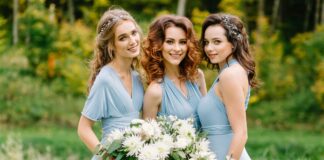
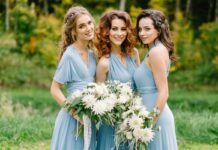
- One colour family, different shades: for example, several blues, with a shared approach to length or formality.
- A small mixed palette: two or three colours repeated across the group, rather than a different unrelated colour for everyone.
- One fabric effect: a similar matt or softly textured appearance can connect outfits even when their colours differ.
These are starting points, not rules. If someone would be more comfortable in a jumpsuit or a suit, consider how it can share the palette rather than making a dress the condition of taking part.
Make the colour brief specific
A name such as sage, dusty pink or champagne can describe quite different colours at different shops. Gather physical fabric samples where available and compare them together in daylight. Screenshots are useful for discussion, but they are not a reliable colour standard.
Decide whether you want a close match or an obvious variation. Several near-matches may look accidental if you expected one uniform colour; a deliberately varied palette gives everyone more room.
Take photographs of the approved samples together for your own reference, while remembering that a phone image is still only a guide. Keep the actual samples until the outfits have arrived.
Talk about money before sharing a shopping list
Explain who is paying and what the budget covers before anyone orders. Include alterations, delivery and any particular shoes or accessories being requested. If the couple is buying the outfits, say whether there is a maximum contribution and how purchases will be arranged.
If bridesmaids are paying, invite private conversations about an affordable limit. A group chat can make it difficult for someone to say that a suggested price is too high. Offer genuine flexibility, including an outfit they already own where that fits the plan.
The chief bridesmaid can help organise information, but should not have to negotiate everyone’s finances or enforce spending decisions on the couple’s behalf.
Give everyone the same short brief
A simple message prevents misunderstandings. For example: ‘We are choosing blue outfits in the attached shades, with a relaxed formal feel. Please choose a style you feel comfortable in, including sleeves or separates. Send your choice before ordering so we can check the colours together. Let me know privately if the budget or timing is awkward.’
Add the agreed budget, who pays, when you need choices and the wedding date. Keep personal measurements and financial conversations out of a shared document unless the person wants to share them.
Check practical details before ordering
Ask each person what they need to feel comfortable: suitable support, sleeves, room to sit and move, or footwear that works with the outfit. Avoid choosing a style for someone based on assumptions about their body.
Check each retailer’s sizing information, delivery estimate and return conditions. Do not assume a made-to-order, altered or personalised item has the same return arrangements as a standard purchase. Leave time for fitting and any adjustments rather than planning around the last possible delivery date.
If someone’s size or needs may change before the wedding, agree a flexible approach with them and the supplier. The outfit should support their participation, not become another source of pressure.
Bring the looks together gently
Shared bouquets or one small accessory can connect the group without requiring matching shoes, jewellery and hairstyles as well. Look at the outfits together before adding more instructions; they may already work.
For photographs, let the photographer arrange people naturally. Nobody needs to stand in a particular place all day to keep a colour pattern intact. The point is a group of people celebrating with you, rather than a display that has to remain perfectly ordered.
Common questions
Can bridesmaids wear different lengths?
Yes, if that suits the overall plan. Agree the level of formality and consider the venue, weather and practical comfort rather than treating one hemline as compulsory.
What if one dress does not work with the others?
Discuss it kindly before it is bought, using the agreed brief rather than a judgement about the person. If the brief changed after purchase, the couple should help resolve the extra cost.
Should the chief bridesmaid look different?
Only if they and the couple want that. A different outfit is an option, not a requirement of the role.