






Your wedding ring budget should be an amount you are comfortable spending, not a proportion of your salary or a target borrowed from someone else’s wedding. The useful question is what that budget buys in the metal, width and design you want.
There is no single price that describes a typical ring well. A narrow plain band, a wide precious-metal ring and a diamond-set design are different products. Before comparing shops, decide on the specification and include any extra costs needed to make the ring ready to wear.
What changes the price?
Metal and fineness
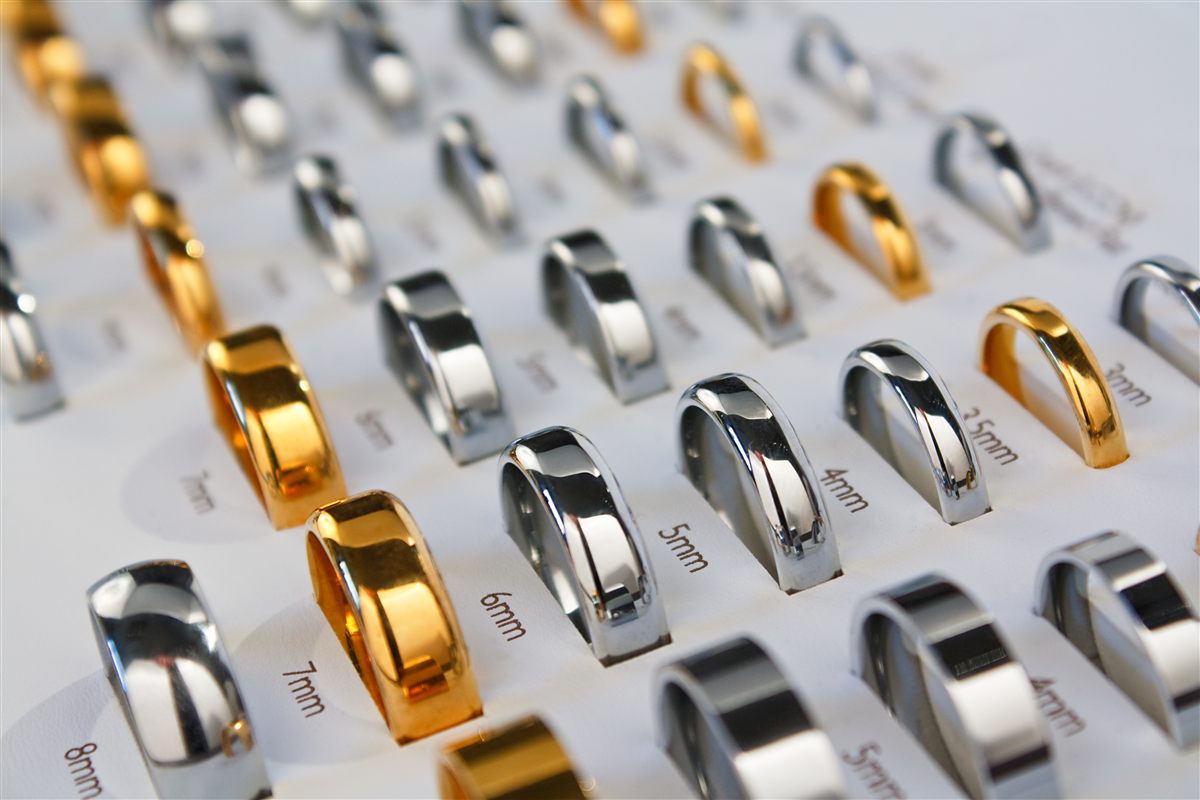
Gold, platinum, silver, titanium and other materials have different properties and prices. Even within gold, 9ct and 18ct describe different gold content. Compare rings with the same metal and fineness before deciding which quote offers better value. Our ring terminology guide explains these labels.
Do not assume platinum is always more expensive than every gold ring, or that a higher gold content automatically makes a ring better for your needs. Weight, design, workmanship and the retailer’s pricing all matter.
Width, depth and construction
A wider or deeper band generally uses more material than a smaller version of the same design. “Light”, “medium” and “heavy” descriptions are not enough to compare two retailers: ask for dimensions and, where available, the approximate weight in your size.
Check whether the ring is solid, hollow or plated. Those descriptions affect what you are buying, and a similar appearance in an online photograph does not make two rings equivalent.
Stones, pattern and custom work
Stone-set bands need a more detailed comparison than plain rings. Ask about stone type, total carat weight and the setting. A shaped band made to fit an engagement ring may also involve work that a standard straight band does not.
If a quote includes bespoke design, find out how many revisions or fittings are included and when the specification becomes final. Keep a written record of what you approve.
Real examples show why the specification matters
These were advertised examples checked on 29 October 2026, not a market average or a promise of stock:
- H.Samuel listed a polished titanium band at £69.99.
- Argos listed a Wedfit 9ct yellow-gold 2.5mm flat-court band at £190.
- Goldsmiths listed a 4mm slight-court 9ct yellow-gold band at £450.
These are not directly comparable rings. The examples illustrate why “wedding rings from…” is less useful than a quote for your size and chosen specification. Recheck the product page before making a decision.
Build a total, not just a ring price
Ask the retailer to identify anything not included in the initial price. Your comparison should cover the ring itself, engraving, any fitting or resizing charge, delivery, and a realistic allowance for alterations if required.
| Item to compare | Question to ask |
|---|---|
| Ring | Is this quote for my exact size, metal, width and depth? |
| Engraving | What is included, and does it change the returns policy? |
| Fit | Can this design be resized, and at what cost? |
| Delivery | Is delivery included and is the arrival date confirmed? |
| Aftercare | Which services are included, for how long, and under what conditions? |
A simple budget exercise for two rings
Suppose you decide that £600 is your maximum total for both rings. You might reserve £100 for any agreed extras and compare pairs costing no more than £500. That is an illustrative planning exercise, not an estimate of what engraving or alterations will cost. Replace the allowance with actual quotes before ordering.
The two rings do not have to cost the same. One partner might prefer a plain narrow band and the other a wider design. Agree the combined limit first, then decide which features matter to each person.
Ways to reduce the cost without buying blindly
Try a simpler finish or a narrower band if it still feels comfortable. Compare pre-owned rings, but check condition and resizing feasibility before assuming a saving. Consider a different metal only after understanding its care and alteration limits.
Skip optional personalisation until you are confident about fit, and do not stretch the budget simply because a retailer presents a monthly payment instead of the full price. For places to compare, see our affordable wedding-ring retailer guide.
Keep hallmarking and returns in the comparison
A recognised hallmark verifies precious-metal content; it is not a guarantee that a particular price is good value. UK hallmarking requirements include weight exemptions, so check the official guidance and ask the seller about the specific item.
Read the returns and alteration terms before paying, especially for personalised designs. Getting the fit right first can avoid a costly change later: use our glossary to compare the specification and take any unanswered questions to the jeweller.