


Contents
- What to Look for in a Wedding Photographer
- How to Compare Wedding Photography Packages
- Questions to Ask Before You Book
- Have you photographed our venue before?
- What information do you need from us before the wedding?
- Can we show you examples from your portfolio that we love?
- How do you handle group photos?
- What happens if you are ill or your equipment fails?
- Are you insured?
- What is your turnaround time?
- Do we receive the raw files?
- What rights do we have to print and share the photos?
- What Should Be in the Wedding Photography Contract?
- Planning with Your Photographer Before the Day
- What to Expect on the Wedding Day
- Waiting for Your Wedding Photos
- Leave a Thoughtful Review
- Wedding Photographer Checklist
- Frequently Asked Questions
- Final Thoughts
Your wedding photos will become one of the few parts of the day you can return to again and again. Flowers fade, food gets eaten, and the speeches become half-remembered stories, but your photographs are there for anniversaries, family albums, framed prints, and the people who could not be there in person.
That is why choosing a wedding photographer should not be a quick “who is available?” decision. The right photographer needs to match your style, understand your venue, work well around your guests, communicate clearly, and give you a contract that explains exactly what you are paying for.
This guide will help you shortlist photographers, compare packages, ask the right questions, and understand what should happen before, during, and after your wedding day.
What to Look for in a Wedding Photographer
A good wedding photographer is more than someone with a beautiful Instagram feed. You are hiring someone to document an emotional, time-sensitive event where there are no second chances. Before you book, look at four things: their work, their process, their reliability, and their terms.
1. Start with Your Venue, Location, and Date
Your wedding date and venue will narrow the search quickly. Start by asking your venue whether they have photographers they regularly work with. A recommended supplier is not automatically the best choice, but venue experience can help with timings, lighting, access, wet-weather options, and the flow of the day.
You can also search locally using Google Business Profile listings, wedding directories, Instagram, and referrals from recently married friends. Keep your search realistic. If you are getting married in Surrey, a photographer based in Edinburgh may still travel, but travel fees, accommodation, and availability can change the final price.
2. Decide What Photography Style You Actually Like
Before asking for quotes, spend time understanding what kind of wedding photos you want. Most photographers lean towards one or more of these styles:
- Documentary or reportage: natural, candid moments with little posing
- Editorial: polished, fashion-led images with more direction
- Fine art: soft, romantic, carefully composed photography
- Traditional: formal group shots and classic couple portraits
- Dark and moody: deeper tones, dramatic lighting, atmospheric edits
- Bright and airy: light, clean, soft-coloured images
Do not choose a photographer and then ask them to shoot in a completely different style. If you want relaxed documentary images, do not book someone whose portfolio is mostly posed editorial work. If you love crisp, timeless black-and-white portraits, look for that consistently across their galleries.
3. Review Full Wedding Galleries, Not Just Highlights
A portfolio shows the best images. A full wedding gallery shows the real standard.
Ask to see two or three complete galleries from weddings similar to yours. Look closely at the whole day: morning preparations, ceremony, confetti, group photos, speeches, evening reception, dance floor, low-light shots, and wet-weather moments.
A strong full gallery should feel consistent from start to finish. The photographer should be able to capture emotional moments, awkward lighting, movement, guests of different ages, and the parts of the day that are not perfectly staged.
4. Read Reviews Carefully
Reviews can tell you things a portfolio cannot. Look for comments about communication, punctuality, calmness, confidence, turnaround time, and how the photographer behaved around guests.
A wedding photographer spends much of the day close to you, your family, and your wedding party. Their personality matters. Beautiful photos are important, but so is having someone who can manage family group shots, stay calm when timings slip, and make camera-shy people feel comfortable.
Check reviews across their website, social media, wedding directories, and Google Business Profile. Pay attention to repeated patterns. One negative review may not tell the whole story, but repeated comments about slow replies, delayed galleries, or poor communication should make you pause.
How to Compare Wedding Photography Packages
Once you have a shortlist, ask each photographer for a clear quote. Give them your date, venue, expected guest count, ceremony time, reception location, and the kind of coverage you want.
What Should Be Included in the Quote?
A useful wedding photography quote should tell you:
- How many hours of coverage are included
- Whether one photographer or two photographers will attend
- Whether travel is included
- How many edited images you can expect
- Whether previews or sneak peeks are included
- How the final gallery will be delivered
- Whether prints, albums, or USBs are included
- What overtime costs if the day runs late
- The deposit amount and payment schedule
- Cancellation and postponement terms
Do not compare photographers on price alone. A cheaper quote may include fewer hours, no second photographer, no album, limited editing, or additional travel fees. The best package is the one that gives you the right coverage, quality, rights, and confidence for your wedding.

Should You Hire a Second Photographer?
A second photographer is useful for larger weddings, multi-location days, and ceremonies where one person cannot capture both partners’ reactions at the same time.
For smaller weddings, one experienced photographer may be enough. For bigger weddings, especially with a large guest list or separate morning preparations, a second shooter can help capture more candid moments and reduce the risk of missed details.
Ask your photographer what they recommend for your guest count, venue layout, and schedule.
Questions to Ask Before You Book
Before paying a deposit, arrange a call or meeting. You do not need to interrogate your photographer, but you should leave the conversation feeling clear about how they work.
Have you photographed our venue before?
Venue experience can be helpful, especially for churches, registry offices, hotels, barns, and country houses with unusual lighting or access rules. If they have not worked there before, ask whether they will visit beforehand or research the venue layout.
What information do you need from us before the wedding?
Most photographers will ask for a timeline, venue addresses, supplier details, emergency contact, group-photo list, and any restrictions from the ceremony location. Some churches and registry offices have rules about where photographers can stand, so it is better to confirm this early.
Can we show you examples from your portfolio that we love?
Yes — and you should. Pointing to specific images helps your photographer understand what matters to you. It also keeps expectations realistic because you are referencing their own work rather than asking them to copy another photographer’s style.
How do you handle group photos?
Group photos can take longer than couples expect. Ask how many formal group shots they recommend, how long they usually take, and whether you should nominate a family member to help gather people.
A short, organised list is usually better than trying to photograph every possible combination on the day.
What happens if you are ill or your equipment fails?
A professional photographer should have backup cameras, lenses, batteries, memory cards, and a plan if they cannot attend. Ask whether they have a trusted network of photographers who could step in during an emergency.
Are you insured?
Ask whether they have public liability insurance and professional indemnity insurance where relevant. Some venues may request proof of supplier insurance before the wedding.
What is your turnaround time?
Ask when you can expect previews and when the full gallery will be delivered. Many wedding photographers take several weeks to edit a full gallery, especially during peak wedding season. The important thing is not the fastest turnaround; it is a clear, realistic timeline.
Do we receive the raw files?
Most wedding photographers do not provide raw files as standard. Their edited images are the finished product. If raw files matter to you, ask before booking, but expect many photographers to say no or charge an additional fee.
In the UK, commissioning photographs does not normally mean copyright automatically transfers to you. Couples usually receive a licence to use, download, print, and share their wedding images, while the photographer keeps the copyright unless there is a written transfer agreement. For privately commissioned photographs, the commissioner also has privacy-related rights around photographs being issued to the public. Make sure your contract explains what you can do with the images and whether the photographer can use them in their portfolio or social media.
What Should Be in the Wedding Photography Contract?
Never rely on a verbal agreement. A written contract protects both you and the photographer.
Your contract should cover the date, locations, arrival time, hours of coverage, package details, payment schedule, cancellation terms, postponement terms, overtime fees, delivery timeline, image usage rights, privacy preferences, and what happens if the photographer cannot attend.
Read it properly before signing. If anything feels unclear, ask. A good photographer will not mind explaining their terms.
Planning with Your Photographer Before the Day
Once booked, your photographer should become part of your wider wedding planning process.
Send your photographer the final version of the day plan, including:
- Getting-ready location
- Ceremony time
- Confetti or exit plans
- Drinks reception timings
- Wedding breakfast time
- Speeches
- Golden-hour portraits, if planned
- First dance
- Evening reception details
Wedding days rarely run perfectly on time, but a clear plan helps your photographer know where to be and when. Add this to your pre-wedding checklist, along with the florist, baker, venue team, and caterers.
Prepare a Group Photo List
Write a short list of must-have group photos. Keep it realistic. Around 8–12 group combinations is usually easier to manage than a long list that takes guests away from the reception for too long.
Nominate someone who knows both families to help gather people. Your photographer can direct the photos, but they may not know who “Auntie Sue” is.
Discuss Food and Breaks
If your photographer is covering the full day, ask what they need for food and breaks. Many couples provide a supplier meal during the wedding breakfast, because this is usually when guests are eating and fewer photographs are needed.
A fed, rested photographer will do better work than someone trying to cover ten hours without a proper pause.
Confirm Any Privacy Requests
Tell your photographer if there are guests who should not be photographed or if you do not want your images shared publicly. This matters for children, sensitive family circumstances, and couples who prefer a private wedding.
It is much easier to agree expectations before the day than to correct misunderstandings afterwards.
What to Expect on the Wedding Day
On the day itself, trust the planning you have done. Your photographer should know the schedule, key people, locations, and must-have shots.
The best thing you can do is enjoy the day. Let them guide you when needed, especially during portraits and group photos, but do not spend the whole wedding worrying about the camera. The most memorable photographs often happen when you are laughing, talking, dancing, hugging, or forgetting that anyone is taking pictures at all.
If the weather changes, do not panic. Experienced UK wedding photographers are used to rain, grey skies, low winter light, windy confetti moments, and muddy outdoor portraits. Ask in advance about wet-weather options so you are not making decisions in the moment.
Waiting for Your Wedding Photos
After the wedding, your photographer will back up, select, edit, export, and deliver your images. This process takes time.
Ask when you can expect a small preview gallery and when the full gallery should arrive. When it does, download and back up your images as soon as possible. Online galleries may not stay live forever.
Once you receive the final gallery, take your time choosing favourites for prints, albums, thank-you cards, and gifts. Albums and framed prints are often worth budgeting for early, because they are the version of your wedding photographs you will actually see every day.
Remember to leave part of your wedding budget aside for prints, albums, and framed favourites if these are not already included in your photography package.
Leave a Thoughtful Review
If your photographer did a good job, leave a detailed review. Mention what they were like before the wedding, how they handled the day, how they made you feel, and what you loved about the final images.
Good reviews help future couples make confident decisions, and they help independent photographers build their business through trust and word of mouth.
Wedding Photographer Checklist
Before booking, make sure you have checked:
- Their photography and editing style matches what you want
- You have seen full wedding galleries, not only highlights
- Reviews mention reliability, communication, and professionalism
- They are available for your date and location
- The package includes the hours and deliverables you need
- Travel, accommodation, albums, prints, and overtime fees are clear
- You understand the deposit and payment schedule
- Cancellation and postponement terms are written down
- The contract explains image rights, printing, sharing, and portfolio use
- They have backup equipment and an emergency plan
- Insurance is available if your venue asks for it
- You feel comfortable spending your wedding day around them
Frequently Asked Questions
How far in advance should I book a wedding photographer?
You should book your wedding photographer as soon as you have confirmed your date and venue, especially for peak UK wedding season between late spring and early autumn. Popular photographers can be booked many months ahead, particularly for Saturdays and bank holiday weekends.
How many wedding photos should we expect?
The number of final images depends on the hours of coverage, number of photographers, guest count, and how much is happening during the day. Ask each photographer for their typical delivery range and check whether the number refers to fully edited images.
Is a cheaper wedding photographer a bad idea?
Not always. A newer photographer may offer good value while building experience. The risk is lower if you have seen full galleries, checked reviews, read the contract, and confirmed backup plans. Do not book on price alone if the photographer cannot show consistent work.
Do we own our wedding photos in the UK?
Usually, you do not automatically own the copyright just because you paid for the photographs. You normally receive usage rights through a licence, while the photographer keeps copyright unless it is transferred in writing. Check your contract before assuming you can edit, sell, publish, or commercially use the images.
Should we feed our wedding photographer?
If your photographer is with you for most of the day, it is sensible to provide food or agree a proper break. Many couples arrange a supplier meal during the wedding breakfast, when there are usually fewer key moments to photograph.
What is the most important thing to ask before paying a deposit?
Ask what is included in the contract. Style matters, but the contract tells you the practical truth: who attends, how long they stay, what you receive, when you receive it, what rights you have, and what happens if plans change.
Final Thoughts
The right wedding photographer should make you feel confident before the day, comfortable during it, and delighted when the gallery arrives. Look beyond the prettiest image on a homepage. Review full galleries, ask practical questions, read the contract, understand your image rights, and choose someone whose style and presence feel right for you.
Your wedding day will pass quickly. Good photography helps you keep hold of the moments you were too busy living to notice.
For more wedding planning advice, browse Ideal Bride Magazine’s full range of wedding articles.
Further Reading





Some great tips, thanks
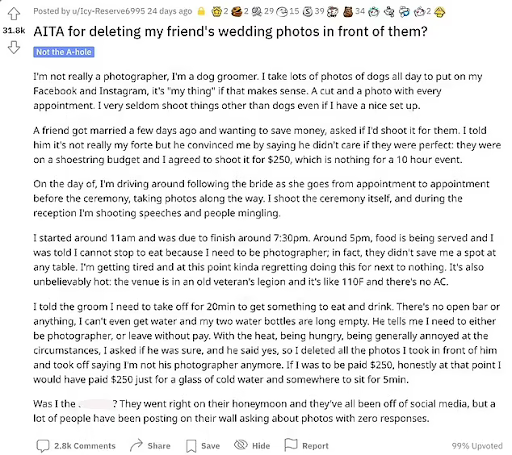
amazing stuff. p.s for AITA, definite no 🙂
great read, very useful